
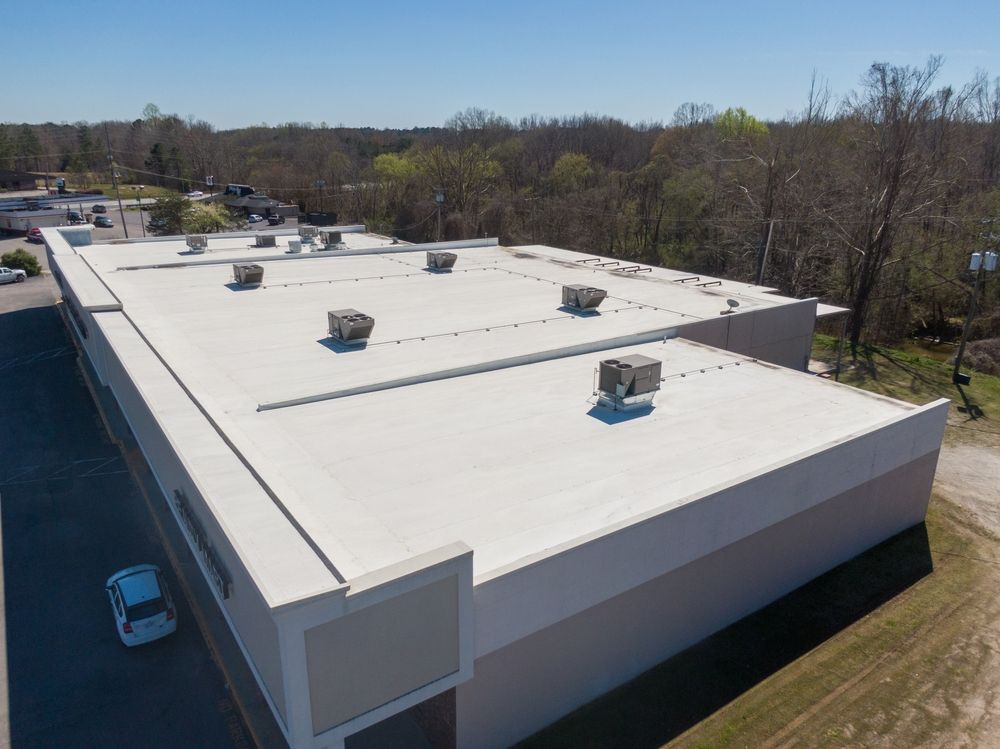
Flat Roofs Engineered for Tropical Runoff
Commercial Roofing in Goldsboro for flat and low-slope systems that handle standing water after heavy rainfall
Flat commercial roofs in Wayne County take standing water stress after heavy tropical rainfall events, and drain placement determines whether water clears or pools on the surface. Red Bow Roofing & Construction installs flat and low-slope roofing systems for businesses and commercial properties across Goldsboro and Mount Olive, where commercial corridors see recurring ponding failures when drainage wasn't planned before installation. Drain placement and slope verification before installation prevents the pooling failures most flat roofs develop, and on-site supervision on every commercial job means these details get checked during the work.
The installation process includes slope calculation to verify minimum pitch toward drains, evaluation of existing drain locations and capacity, and substrate preparation to create positive drainage across the entire roof surface. Pre-installation drain and slope engineering separates this approach from standard commercial roofers who replace membrane without addressing the drainage design that caused the original failure.
Schedule a roof assessment to identify current drainage deficiencies and ponding areas.
What Proper Drainage Design Prevents
Ponding water accelerates membrane deterioration, adds structural load to roof decking, and creates leak points at seams and penetrations. Slope design must account for deflection under load, which means the roof needs more than minimum pitch when spans are long or decking flexes. Drain sizing and placement determine whether the roof clears water during the sustained rainfall rates that tropical systems produce, and undersized drains create ponding even when slope is adequate.
After installation, you'll notice that the roof surface clears within hours after rainfall stops, no standing water remains in low areas, and seams stay dry during wind-driven rain because water doesn't pool against membrane joints. The system handles the runoff volumes that tropical storms produce without overwhelming drain capacity or stressing structural members with prolonged water weight.
Commercial roofing projects include structural load evaluation to verify the building can support rooftop equipment and water accumulation, coordination with HVAC and electrical contractors for penetration details, and phased installation when the building must remain operational during construction. Material selection depends on roof access requirements, equipment loads, and whether the building owner plans rooftop installations in the future.
Answers to Frequent Service Questions
Commercial property owners across Eastern NC want to know what causes flat roof failures and how to prevent recurring leaks.
What causes flat roofs to pond water after installation?
Insufficient slope design, deflection under load that creates low spots, undersized or poorly placed drains, and settlement of roof deck or structural members all contribute to ponding that wasn't present during initial installation.
How much slope does a flat commercial roof actually need?
Minimum code requires one-quarter inch per foot, but deflection under load and long spans often require one-half inch per foot to maintain positive drainage after the roof loads with water and equipment weight.
Why do commercial roofs in Goldsboro fail faster than in other regions?
Heavy tropical rainfall events, prolonged high humidity, and hurricane-season wind uplift all stress membrane seams and fastening systems more aggressively than standard weather conditions in less exposed regions.
When should commercial building owners replace the entire roof system versus patching leaks?
Full replacement makes sense when ponding covers more than ten percent of the roof area, when multiple seam failures indicate membrane aging, or when the substrate shows rot or deflection that patching won't address.
What's involved in the pre-installation engineering process for commercial flat roofs?
Slope verification with laser levels, drain capacity calculation based on roof area and rainfall rates, structural load assessment, and substrate inspection to identify areas needing reinforcement before membrane installation.
Red Bow Roofing & Construction operates as a family-owned contractor with direct experience addressing the drainage failures that flat roofs develop across Eastern NC, and every commercial project includes pre-installation drain and slope engineering to prevent recurring ponding. Request a free estimate that includes drainage assessment and slope verification for your commercial property.