
Walls That Hold Against Storm Rain
Siding in Goldsboro for homes where tropical storm exposure and humidity require proper moisture barrier installation
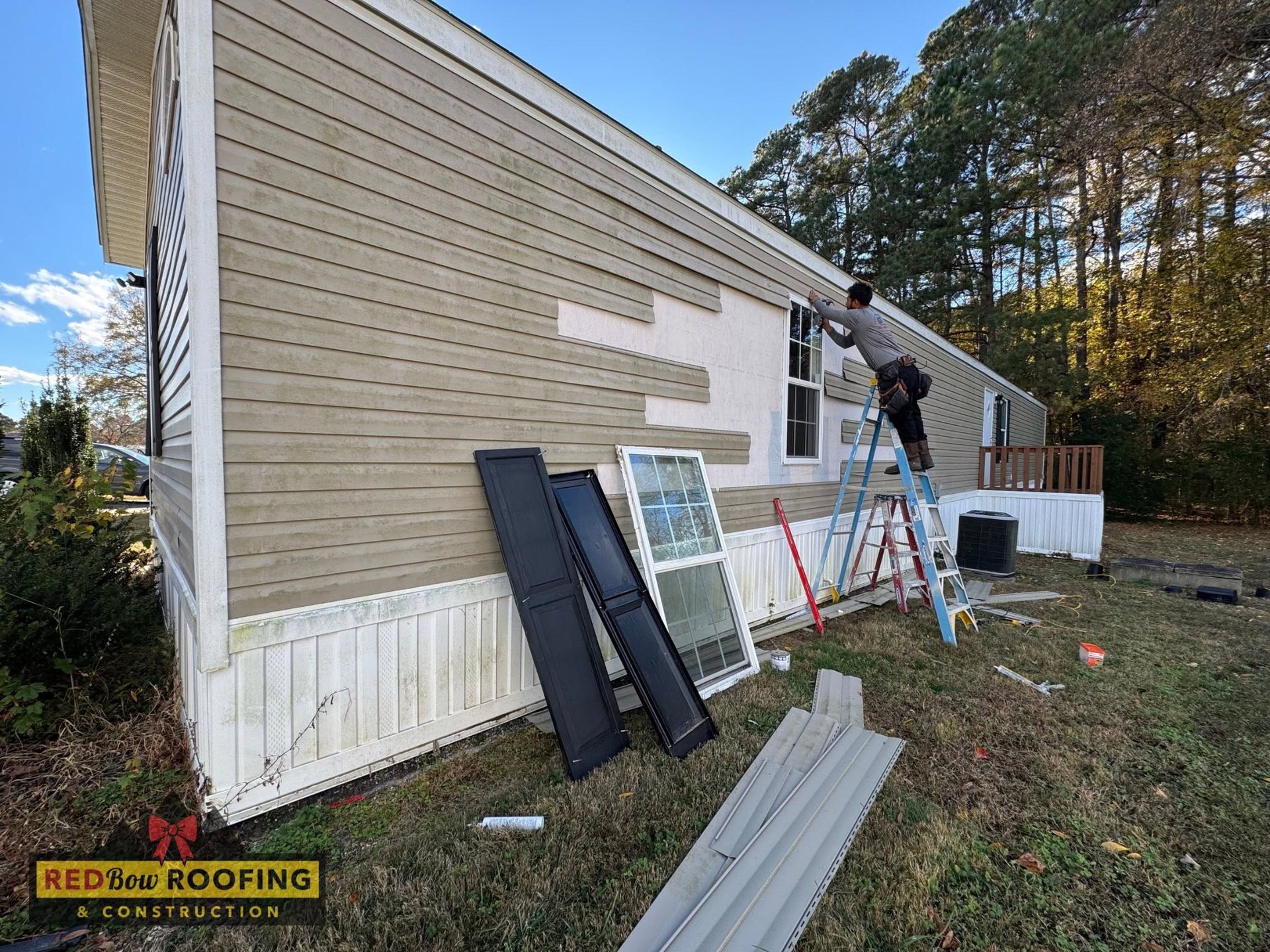
Housewrap and flashing integration at windows and corners determines whether siding holds or traps moisture for years, and most Eastern NC homes don't realize moisture is accumulating until wall rot appears behind the siding. Red Bow Roofing & Construction handles siding installation and replacement across Goldsboro and Eastern NC, where storm-driven rain and year-round humidity make proper moisture barrier detail the difference between cosmetic siding and a system that protects your walls. Homes in Goldsboro and Princeton face especially high tropical storm splash exposure during hurricane season.
Siding installation involves removing old material, inspecting wall sheathing for hidden rot or damage, installing a continuous moisture barrier with proper overlap, integrating flashing at every window and corner, and then fastening new siding with room for thermal expansion. The moisture barrier and flashing steps are where most crews cut time, but those details determine whether water stays outside your walls or seeps behind the siding and sits against the sheathing for months.
Schedule a siding evaluation to assess your current exterior condition and identify vulnerable areas before wall damage spreads.
How Moisture Barrier Detail Affects Long-Term Performance
Proper housewrap installation requires overlapping seams in a shingle pattern so water always flows down and out, never sideways or behind the barrier. Flashing at window heads and sills must be integrated with the housewrap in the correct sequence—sill pan first, then jamb wraps, then head flashing—so that water running down the wall surface is directed away from rough openings. Red Bow's on-site supervision ensures this sequencing is followed at every opening, which prevents the hidden moisture intrusion that causes rot years after installation.
After installation, your walls shed rain instead of absorbing it, and you won't see water stains forming at window corners or along horizontal seams. Eastern NC's combination of summer thunderstorms and tropical systems means siding takes repeated wind-driven rain exposure, and only correctly layered moisture barriers keep that water from reaching your wall sheathing.
The process includes corner board installation that closes transitions without leaving gaps, J-channel placement that doesn't trap water behind trim, and fastener placement that allows siding to move with temperature changes without buckling or pulling loose. Siding installed without room for expansion will warp during summer heat, and siding fastened too tightly will crack when temperatures drop.
What Homeowners Ask Before Siding Replacement
Homeowners in Goldsboro dealing with aging or damaged siding often have questions about the replacement process and what separates a lasting installation from one that fails in a few years.
What causes wall rot behind siding even when the exterior looks fine?
Wall rot happens when water enters at windows, corners, or horizontal seams and sits against sheathing behind the siding. Without proper flashing integration, even new siding can trap moisture in the wall cavity where you won't see it until structural damage occurs.
How does Eastern NC humidity affect siding performance differently than in drier climates?
High humidity means water vapor can move through walls from inside to outside, and if siding or housewrap traps that vapor, condensation forms against the sheathing. Properly installed moisture barriers allow vapor to escape while keeping liquid water out, which is critical in Eastern NC's humid summers.
When should I replace siding instead of repairing sections?
Full replacement makes sense when you see widespread cracking, warping, or signs of moisture damage at multiple locations, or when existing siding was installed without a proper moisture barrier. Spot repairs work for isolated storm damage, but systemic failure requires addressing the entire wall assembly.
What happens during the window flashing step that most crews skip?
Window flashing involves installing a sill pan at the bottom of the rough opening, wrapping jambs with self-adhering membrane, and lapping head flashing over the top—all integrated with the housewrap in a specific sequence. Skipping this step or doing it out of order leaves gaps where water can enter the wall.
How long does properly installed siding last on Eastern NC homes?
Siding lifespan depends on material type and installation quality, but with correct moisture barrier and flashing detail, most siding systems last 20 to 30 years in Eastern NC. Installations that skip flashing or housewrap often show rot damage within 5 to 10 years, especially around windows and corners.
Red Bow Roofing & Construction provides free estimates for siding installation and replacement throughout Goldsboro and Eastern NC. Contact the family-owned team to arrange an inspection of your existing siding and wall sheathing condition.