
Structures Built to Outlast Ground Moisture
Decks in Goldsboro for homes where humidity and soil moisture accelerate post and ledger rot faster than standard construction survives
Ledger board flashing and post footing depth are the two steps most crews skip that cause structural failure within five years, and both matter more in Eastern NC than cosmetic decking choices. Red Bow Roofing & Construction builds and repairs decks for homeowners in Goldsboro and Eastern NC, where year-round humidity and ground moisture create conditions that rot untreated posts and unflashed ledgers long before the decking surface shows wear. Properties in Goldsboro and Seven Springs face especially high soil moisture exposure, which accelerates wood decay at ground contact points and requires footing depth that extends below the frost line and seasonal water table fluctuations.
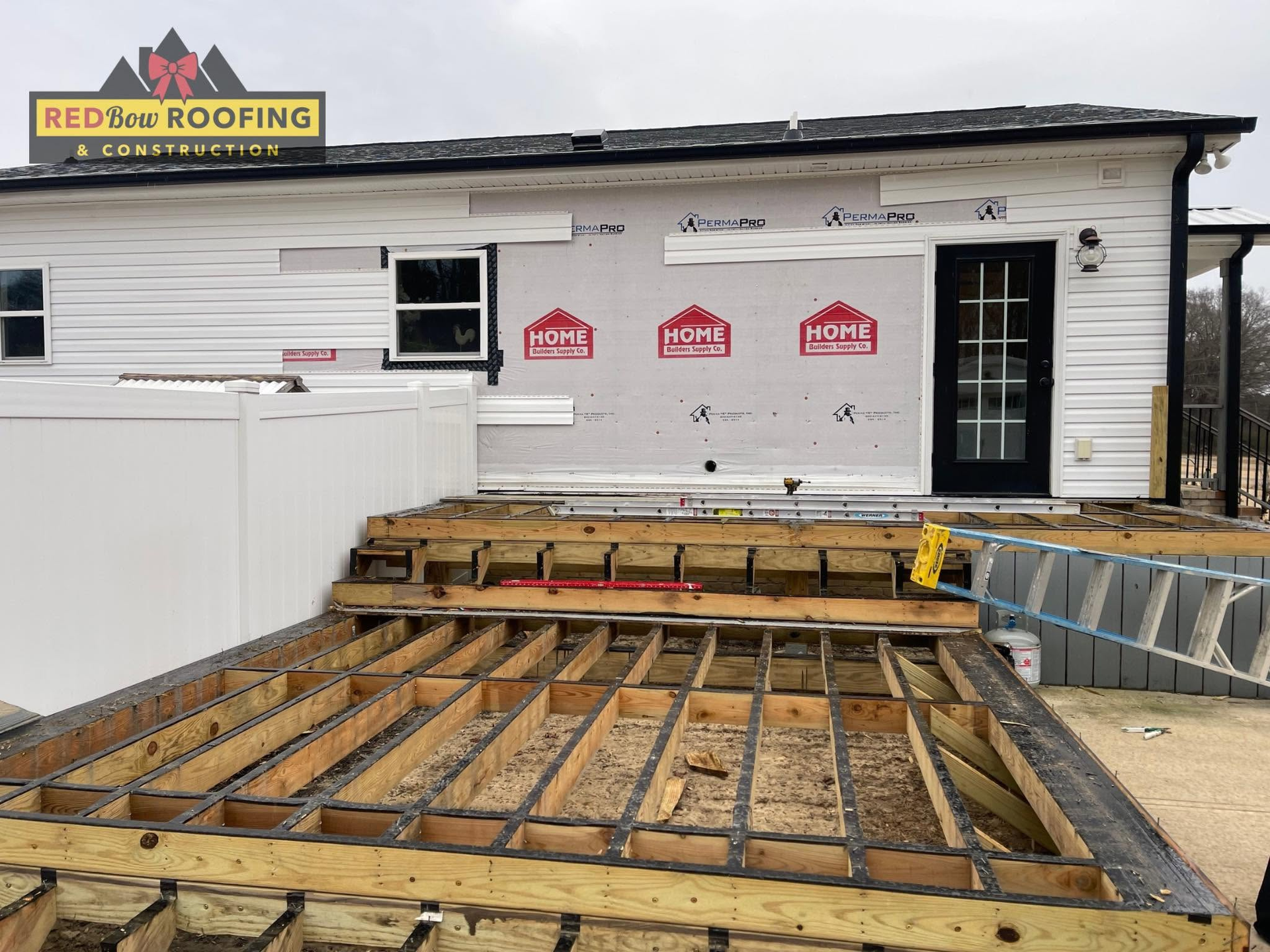
Deck construction starts with installing footings at proper depth and diameter to resist settling and frost heave, setting posts on footing brackets that keep wood above ground contact, bolting a ledger board to the house structure with through-bolts at correct spacing, installing flashing above the ledger so water flows down the wall and over the board instead of behind it, framing joists with correct span and spacing for the decking material, and then fastening decking with room for expansion. The ledger flashing and footing depth steps are where most failures originate, because an improperly flashed ledger traps water against your home's band joist and rim, causing hidden rot that compromises structural support, while shallow footings allow the deck to settle unevenly or heave during freeze-thaw cycles.
Request a deck consultation to review your site's soil conditions, drainage patterns, and structural attachment requirements before construction begins.
Why Ledger and Footing Detail Prevent Structural Failure
Ledger boards must be attached to solid framing—not just sheathing or siding—with through-bolts or lag screws at spacing determined by deck load and joist size, and then covered with metal flashing that laps over the top of the ledger and under the house moisture barrier. Without flashing, water running down the wall soaks into the ledger and band joist, causing rot that spreads into your home's floor framing where it's invisible until structural failure occurs. Footings must extend below frost depth and seasonal moisture fluctuations so the deck doesn't settle, heave, or pull away from the ledger as soil conditions change through wet and dry seasons.
After construction, your deck remains level and doesn't separate from the house, posts show no signs of rot at ground level, and the ledger connection stays solid even after years of Eastern NC humidity and storm exposure. On-site supervision during Red Bow's deck builds ensures ledger flashing is installed before siding or trim covers the connection, and that footing holes are dug to proper depth and inspected before concrete is poured.
The system includes joist hangers that prevent lateral movement, blocking between joists that stiffens the frame and prevents bounce, and decking fasteners that allow wood to expand and contract without splitting or pulling loose. Decks built without proper ledger attachment or footing depth develop structural movement, separation at the house connection, or post rot within five to ten years—all failures that require expensive rebuilds rather than surface repairs.
What Homeowners Ask Before Deck Construction
Homeowners in Goldsboro planning deck projects or dealing with failing existing decks often ask what separates a structure that lasts from one that requires early replacement due to rot or structural issues.
What causes deck ledgers to rot even when the decking surface looks fine?
Ledger rot happens when flashing isn't installed above the board, allowing water running down the house wall to soak into the ledger and band joist behind it. That rot spreads into your home's floor framing where you can't see it, and by the time movement or failure is noticeable, structural damage is extensive.
How does Eastern NC ground moisture affect deck posts differently than in drier regions?
High soil moisture and year-round humidity in Eastern NC accelerate wood decay at ground contact points, which is why posts must be set on brackets that elevate wood above concrete footings. Posts embedded directly in concrete or soil will rot at ground level within a few years, compromising the entire deck structure.
When should footing depth go deeper than standard recommendations?
Footing depth must extend below frost line to prevent heaving and below seasonal water table fluctuations to prevent settling. In Pikeville and Seven Springs, where soil stays moist year-round and drainage patterns vary by property, footing depth is determined by site conditions rather than generic building code minimums.
What happens if a deck is attached to siding instead of structural framing?
Ledgers bolted only to siding or sheathing—without reaching solid band joist or rim framing—can pull away from the house under load, causing catastrophic deck collapse. Proper ledger installation requires removing siding, bolting through sheathing into solid framing, and then flashing before siding is reinstalled.
How long do properly built decks last on Eastern NC homes?
With correct ledger flashing, adequate footing depth, and posts elevated above ground contact, most decks last 15 to 25 years in Eastern NC before decking surface replacement is needed. Decks built without ledger flashing or proper footing depth often show structural rot or failure within 5 to 10 years, requiring full rebuilds rather than surface repairs.
Red Bow Roofing & Construction offers free estimates for deck construction and repair throughout Goldsboro and Eastern NC. The family-owned team evaluates your site's soil conditions, drainage, and structural attachment requirements to build decks engineered for Eastern NC humidity and ground moisture exposure.