
Commercial Roofs Built for Long Summers
TPO Roofing in Goldsboro for flat-roof buildings that need heat reflection and seam durability through Eastern NC storm seasons
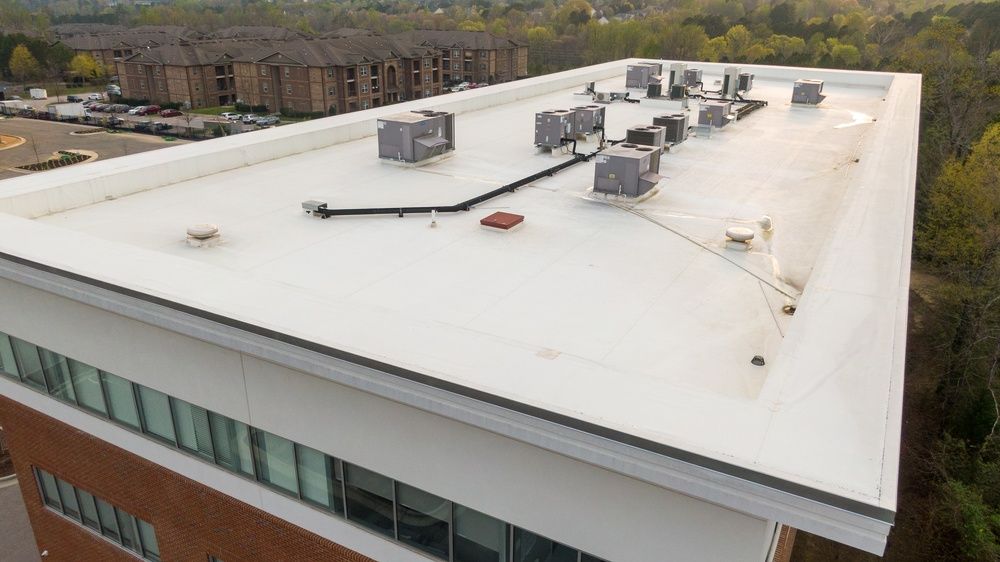
Red Bow Roofing & Construction installs TPO roofing on commercial buildings across Goldsboro and Eastern NC, where heat-reflective thermoplastic membranes lower cooling costs during long, humid summers. Flat-roof commercial properties in Mount Olive and Goldsboro see the highest benefit from TPO's ability to reflect solar heat while standing up to tropical storm wind and rain. The difference between a TPO roof that lasts twenty years and one that requires repairs in seven comes down to weld quality at every seam.
TPO roofing uses a single-ply thermoplastic membrane that's heat-welded at seams to create a continuous waterproof barrier across flat or low-slope commercial roofs. On-site supervision ensures every seam is welded correctly the first time, because improperly fused joints allow water infiltration that spreads beneath the membrane and accelerates failure. Eastern NC's combination of summer heat, hurricane-season rainfall, and high humidity makes weld integrity the single most important variable in TPO performance.
Request a roof evaluation to review your building's existing membrane condition and seam integrity.
What Weld Quality Changes on a TPO Roof
Proper TPO installation requires heating seams to the exact temperature that fuses the thermoplastic layers without burning through or leaving gaps. Red Bow's on-site supervision at every stage of installation means seam integrity is verified before the roof is considered complete, and every penetration—around HVAC units, vents, and roof drains—receives the same weld-quality attention.
After installation, you'll notice that ponding water doesn't penetrate seams, roof surfaces remain cooler to the touch even in July, and your building's cooling costs drop compared to darker or non-reflective roofing. TPO membranes reflect heat instead of absorbing it, which reduces the load on air conditioning systems and lowers energy costs through summer months when Eastern NC commercial buildings run cooling continuously.
The system includes fastening that resists wind uplift during storm events, flashing details at all roof edges and transitions, and a membrane thickness selected based on your building's use and roof traffic patterns. TPO doesn't require annual recoating like some commercial roofing systems, but periodic inspections ensure seams and penetrations remain sealed as the membrane ages.
Questions Commercial Owners Ask Before TPO Installation
Owners of flat-roof commercial buildings in Goldsboro often ask about TPO before committing to installation, especially when comparing it to other single-ply systems or existing roof types.
What makes TPO seams fail early on some commercial roofs?
Seams fail when welding temperatures are inconsistent or when installers rush the fusion process, leaving sections that appear bonded but separate under wind load or thermal expansion. On-site supervision catches these defects during installation rather than years later when leaks appear.
How does TPO handle Eastern NC summer heat compared to darker roofing?
TPO membranes reflect up to 80 percent of solar radiation, which keeps roof surface temperatures significantly lower than black EPDM or asphalt-based systems. That heat reduction translates directly to lower cooling costs and less thermal stress on the membrane itself.
When should a commercial building owner consider TPO over other flat-roof options?
TPO makes sense when energy costs are a concern, when the building has consistent sun exposure, or when you're replacing an aging membrane that's developed multiple leak points. Buildings in Goldsboro and Mount Olive with large flat roof areas see the fastest return on TPO investment.
What happens if a seam does develop a leak after installation?
A properly welded TPO seam can be inspected and re-welded if necessary, but finding the exact failure point requires experience because water travels beneath the membrane before it appears inside the building. That's why preventing seam defects during installation is far easier than tracing leaks later.
How long does TPO roofing typically last on Eastern NC commercial buildings?
TPO membranes are manufactured to last 20 years or more, but actual lifespan depends entirely on installation quality—particularly weld integrity and fastening pattern. Roofs installed without on-site supervision or proper seam verification often require major repairs within seven to ten years.
Red Bow Roofing & Construction provides free estimates for commercial building owners evaluating TPO roofing in Goldsboro and across Eastern NC. Schedule an on-site assessment to review your roof's dimensions, existing condition, and energy cost reduction potential.